How Does NDIS Funding Cover Home Modifications in Sydney?
The National Disability Insurance Agency funds home adjustments through your Capital Supports budget when physical barriers in your private residence compromise safety or independence. Approvals require an Occupational Therapist assessment confirming the work is a reasonable, cost-effective solution directly linked to your functional disability needs.
Funding splits into two distinct tiers across New South Wales: minor alterations and complex works.
Minor jobs focus on straightforward non-structural fixtures, while major works require formal quoting from licensed Sydney builders who understand structural integrity.
When you need structural adaptations, securing reliable Home Modifications NDIS Sydney ensures that every layout change meets both National Construction Code rules and NDIA pricing guidelines.
What Is the Difference Between Minor and Complex Modifications?
Minor modifications involve low-cost, surface-level adjustments that do not alter the structural load or essential plumbing lines of your home.
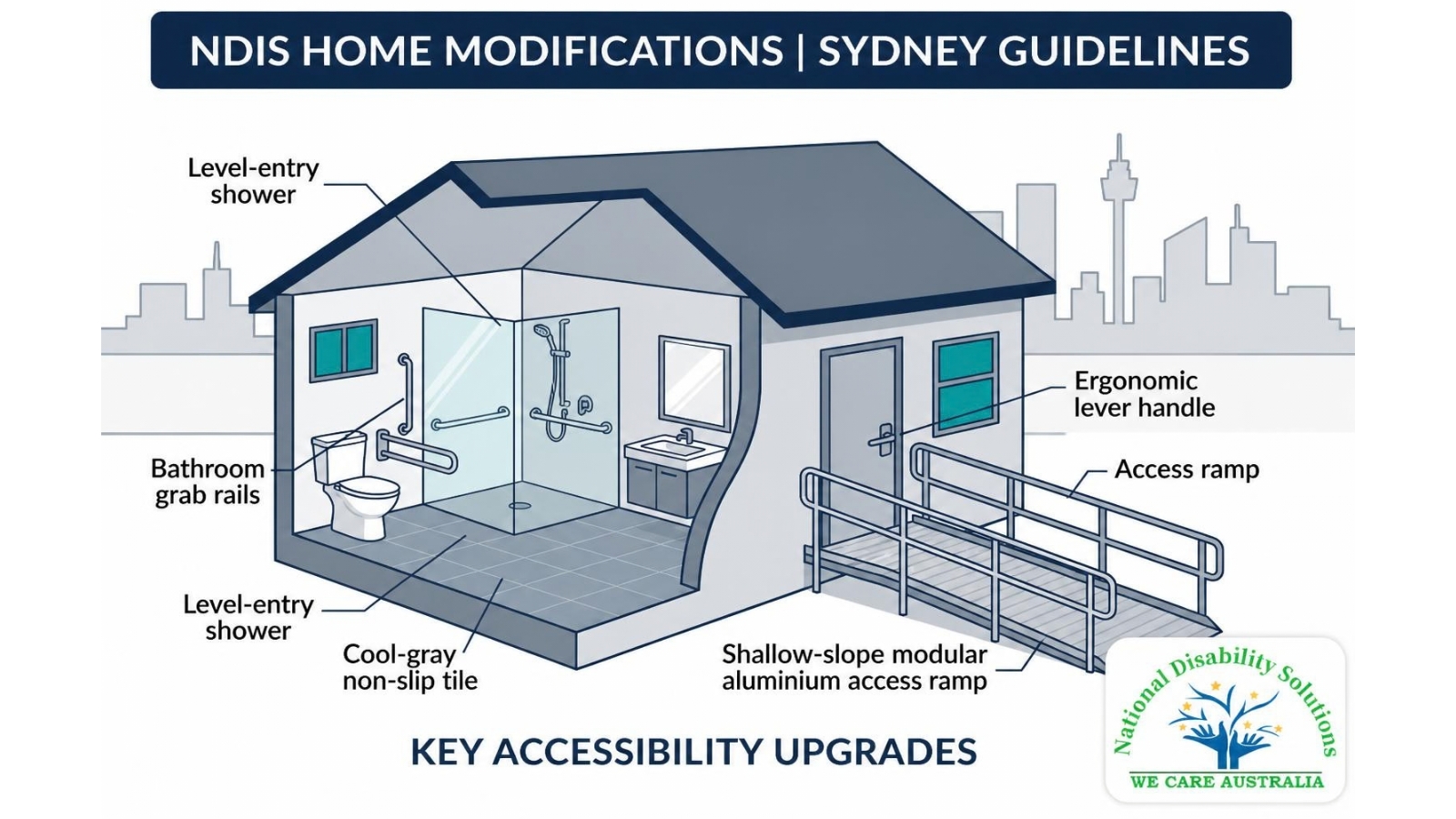
These include grab rails, handheld shower hoses, threshold ramps across sliding doors, and minor lever tap replacements that an installer can complete quickly.
Complex adaptations, by contrast, involve structural redesigns, wall removals, ceiling hoist tracks, or complete subfloor alterations.
These complex works require detailed architectural sketches, licensed structural engineers, and comprehensive approvals before any hammer swings on site.
Planning a full NDIS Home Modification Sydney project demands a registered builder experienced in coordinating with your Occupational Therapist to ensure scope alignment.
What Steps Are Required for NDIS Bathroom Modifications in Sydney?
Bathroom spaces present the highest risk of slips, falls, and transfer injuries in residential homes across Sydney.
Converting a traditional, cramped bathroom into an open, level-entry design requires stripping the floor back to the joists or concrete slab.
Contractors must grade the floor towards a central waste drainage channel to prevent water pooling while removing the shower hob completely.
The entire wet area demands strict waterproofing under Australian Standard AS 3740 to prevent moisture damage to adjoining rooms.
Executing compliant NDIS Bathroom Modifications Sydney requires trades who understand fall ratios and reinforced wall backing for fold-down shower seats.
Do You Need Strata or Council Approval for Structural Work in Sydney?
If you live in an apartment, townhouse, or villa in Greater Sydney, strata bylaws dictate what changes you can make to common property.
Drilling through external walls, altering common plumbing stacks, or changing front door widths requires a formal submission to your owners corporation.
Stand-alone homes undergoing structural extensions or boundary-adjacent modifications may also require a Complying Development Certificate (CDC) or a Development Application (DA) through your local municipal council.
Professional teams like National Disability Solutions work alongside participants to prepare technical documentation, ensuring strata committees review accurate building plans without unneeded delays.
Failure to secure written body corporate consent before work commences can halt construction, creating unnecessary administrative disputes.
How Long Does the NDIA Review and Approval Process Take?
Standard approvals for minor, low-cost modifications typically process within a few weeks once your assessment is logged.
Complex structural submissions require significant NDIA capital budget reviews, often taking anywhere from three to six months.
The most common cause of delay is a mismatch between the Occupational Therapist’s clinical recommendations and the builder’s itemised scope of works.
To avoid setbacks, your builder and therapist must cross-reference exact measurements, structural specs, and product model numbers before submission.
Partnering with certified providers for Disability Home Modifications Sydney ensures that quotes meet strict Agency value-for-money tests on the first submission.
Frequently Asked Questions
Can I modify a private rental property under the NDIS?
Yes, provided your landlord provides written consent and the NDIA deems the installation clinically justified and fully portable or structurally reasonable.
Does NDIS funding cover ongoing maintenance for modifications?
The NDIS covers repairs and essential servicing for specialised equipment or structural elements installed under your approved plan.
Who selects the builder for my home project?
You retain complete choice and control to select any licensed, insured builder who satisfies NDIA compliance standards and pricing criteria.
Transforming your living environment should make daily life safer, simpler, and fully accessible. Reach out to discuss your structural assessment, plan goals, or property requirements with the dedicated team at National Disability Solutions today.
- Phone: 02 9011 7747
- Email: info@nationaldisabilitysolutions.com.au
- Address: 63 Emert Street, Wentworthville, NSW 2145, Australia
- Website: https://nationaldisabilitysolutions.com.au/
- Social Profiles: Facebook | LinkedIn