1. Identify Your Exact Clinical Scope Under NDIS Guidelines
In-home disability nursing delivers clinical interventions directly in your residence, funded under NDIS Core or Capacity Building budgets. Registered nurses evaluate medical risks, manage complex medication schedules, supervise wound healing, and develop prescribed care plans for needs that exceed standard daily personal support.
Standard disability support covers basic hygiene and domestic assistance, but clinical needs demand registered medical expertise.
Families often face burnout trying to administer medications or treat skin breakdowns without clinical oversight.
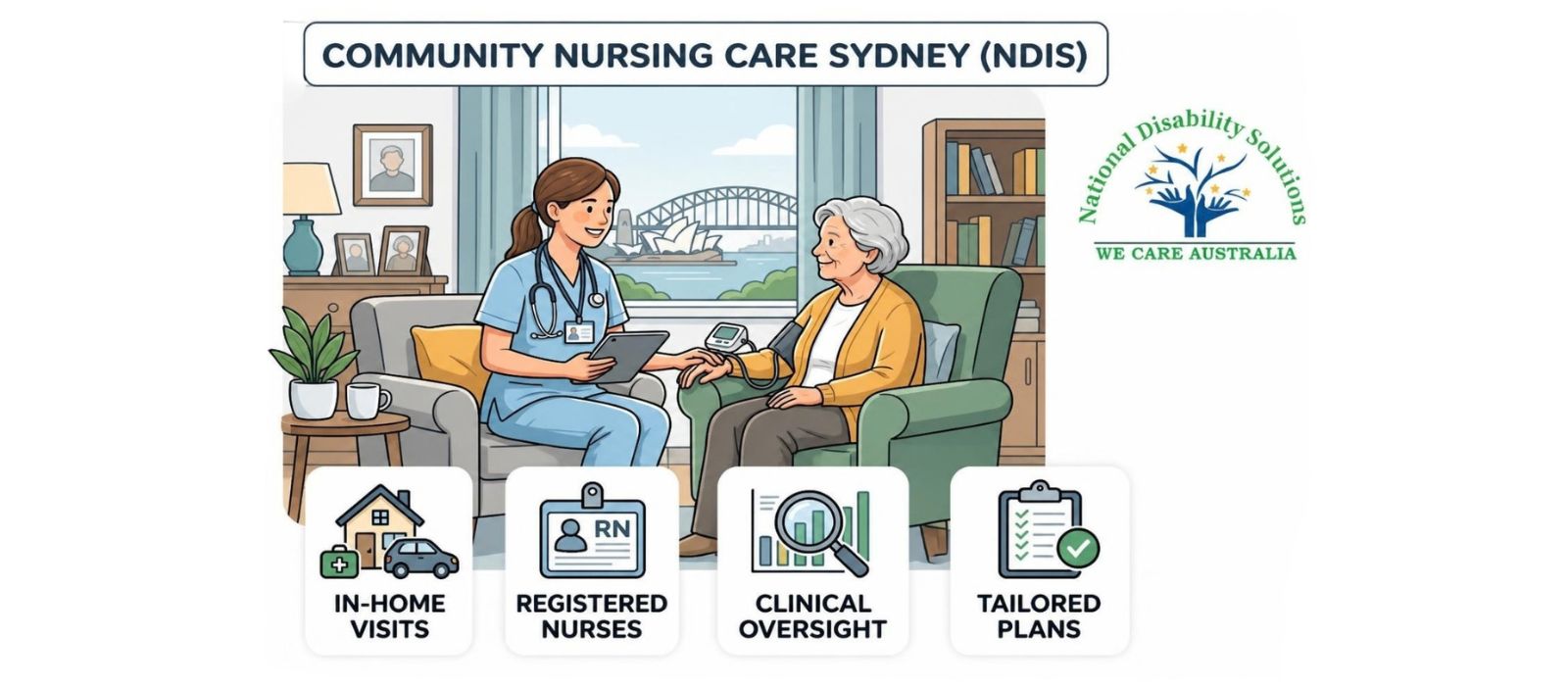
Partnering with licensed teams for Community Nursing Care Sydney bridges the gap between acute hospital discharge and comfortable home recovery.
2. Establish a Formal Plan for High-Intensity Needs
Invasive health needs require strict clinical governance designed by an Australian Health Practitioner Regulation Agency (AHPRA) registered nurse.
Conditions involving autonomic dysreflexia risk, severe constipation, or spinal injuries require daily charting and tailored medical routines.
- Clinical Assessment: A thorough evaluation of baseline health, digestive health history, and mobility restrictions.
- Written Protocols: Creating an escalating action plan that details warning signs before emergencies occur.
- Carer Competency Checks: Ensuring every support worker understands strict hygiene and proper administration procedures.
Securing certified practitioners for Complex Bowel Care NDIS Sydney prevents avoidable emergency room visits and protects long-term bowel health.
3. Verify Registered Nurse Qualifications and Clinical Oversight
Not every support worker can perform invasive procedures, subcutaneous injections, or complex catheter changes.
NDIS quality benchmarks require that high-intensity clinical activities stay supervised by an experienced Registered Nurse (RN).
When evaluating local providers, confirm that their clinical team maintains direct clinical oversight over Enrolled Nurses and support staff.
Our clinicians at National Disability Solutions work alongside families across Western Sydney to maintain compliant, safe, and dignified medical routines.
Structured NDIS Nursing Services Sydney ensures that every dressing change and vitals check aligns with your physician’s exact treatment orders.
4. Integrate In-Home Care with Your Allied Health Network
Clinical nursing produces the best outcomes when it operates in sync with your broader allied health team.
Your visiting nurse must communicate regularly with your general practitioner, occupational therapist, and physiotherapist.
- Skin Integrity: Nurses coordinate with OTs to calibrate pressure-relieving cushions and specialized mattresses.
- Nutrition & Feeding: Enteral feeding management (PEG tube care) coordinates with your speech pathologist and dietitian.
- Mobility Monitoring: Physical transfers are tracked alongside physiotherapists to prevent joint strain.
Booking dependable Home Nursing Care Sydney ensures your medical team shares notes and tracks physical progress without gaps.
5. Match Your Funding Categories to Certified Clinical Goals
NDIS plans fund nursing under specific support line items within your Core Supports or Capacity Building budgets.
Misallocating line items often leads to funding exhaustion or administrative claim rejections midway through your plan year.
Work with your support coordinator to verify that clinical assessments clearly specify the hours required for direct nursing care.
Selecting experienced specialists for Disability Nursing Care Sydney guarantees that progress reports clearly document functional gains for your upcoming plan review.
Accurate documentation keeps your clinical funding stable while ensuring continuous, uninterrupted treatment at home.
Frequently Asked Questions
What qualifications do in-home disability nurses hold?
Nurses must hold current AHPRA registration as a Registered Nurse (RN) or Enrolled Nurse (EN) with specialized clinical experience.
Can NDIS nursing funding cover everyday support worker tasks?
No, nursing funds cover clinical healthcare tasks, while standard personal support handles household chores, companionship, and non-clinical daily living tasks.
How is a bowel management routine monitored safely at home?
A Registered Nurse designs a clinical plan, trains support staff, and regularly reviews bowel charts to catch issues early.
Who pays for clinical consumables like dressings and catheters?
Clinical consumables are funded through your NDIS Capital or Core budget, separate from nursing consultation hours.
Do I need a doctor’s referral to access NDIS community nursing?
A doctor’s medical summary or hospital discharge plan helps establish clinical necessity, but you do not need a formal GP referral.
Securing professional clinical support at home protects your comfort, health, and personal independence. Connect with the clinical team at National Disability Solutions to discuss your health support plan today.